
From Musician to Filmmaker
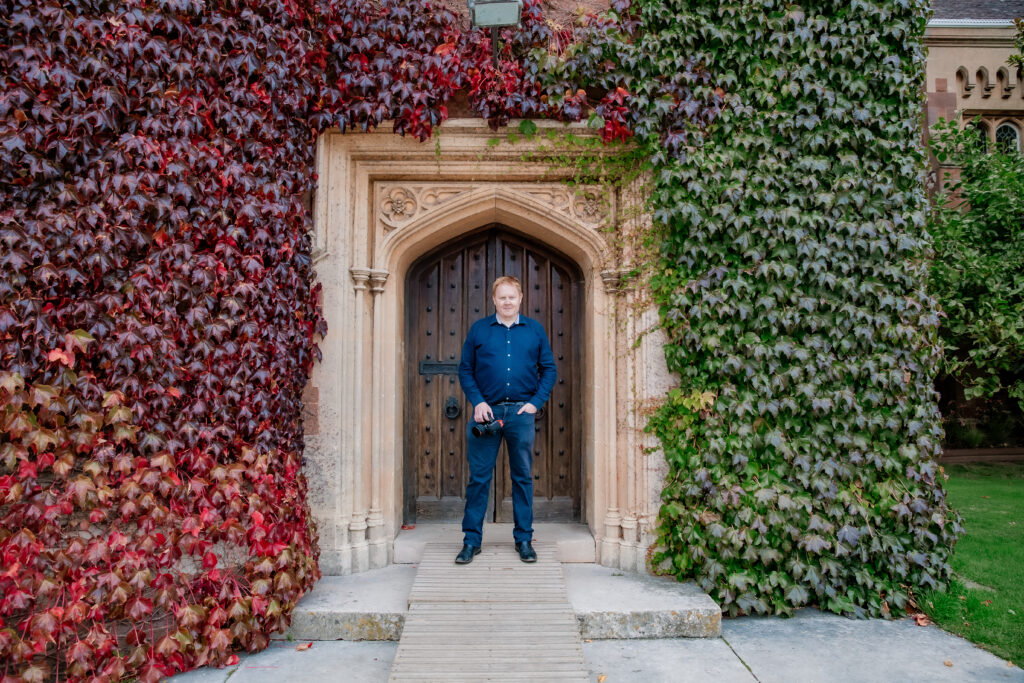
How 14 years as a Royal Marines Musician shaped the way I approach every wedding I film:
Most wedding videographers come to the craft through photography, film school, or a lifelong love of cinema. My route was a little different. For 14 years I wore the uniform of a Royal Marines Musician, performing across the world, playing at ceremonial parades, state occasions, and grand celebrations — including one very famous wedding at Windsor Castle. What that career gave me wasn't just discipline and dedication. It gave me a way of hearing the world that, it turns out, is one of the most useful skills a wedding filmmaker can have.
When I made the transition from performing to filming, people sometimes asked whether the two careers had anything in common. The honest answer is: almost everything.
Listening before you look
Music teaches you to listen — really listen. Not just to the melody, but to the space between the notes. To the breath a singer takes before a phrase. To the slight hesitation in a room before a piece of music takes hold of an audience. As a musician, you are acutely aware that silence is as expressive as sound, and that timing is everything.
Wedding filmmaking works in exactly the same way. The moments that make a wedding film unforgettable are rarely the obvious ones. They are the father of the bride steadying himself before the doors open. The shared glance between partners during a reading. The quiet laugh between best friends at the back of the ceremony. You only catch those moments if you are already attuned to the emotional rhythm of the day — and years of musical training had quietly been preparing me for exactly that.
"A great wedding film, like a great piece of music, is built on tension and release — the quiet moments that make the loud ones mean something."
Structure, tempo, and the edit
My entry point into videography wasn't the camera — it was the edit suite. With a background in music recording and production, I already understood how to shape a piece from raw material. In music, you learn that a track isn't just a collection of sounds; it's a journey with its own pace, arc, and emotional logic. The same is true of a wedding film.
When I sit down to edit, I think about it the way I'd approach a piece of music. Where is the opening that draws you in? Where is the build? Where is the emotional peak, and how do you carry the audience back down afterwards? Every cut has a rhythm. Every transition is a beat. The music I choose for a film isn't an afterthought — it's the backbone that everything else is shaped around, because I know from decades of experience what music does to people in a room, and I know how to make it work.
A note on music selection
Choosing the right track for a wedding film is one of the most important decisions in the edit. Too many films use whatever is trending. I spend time finding pieces that genuinely reflect the couple — sometimes classical, sometimes contemporary, always intentional. Music isn't decoration. It's the emotional engine of the film.
Performing under pressure
The Royal Marines don't rehearse for the performance — they rehearse so that the performance is effortless. Fourteen years of that discipline means that on a wedding day, when everything is moving fast and you have one chance to capture the shot, I'm not rattled. I'm in my element.
Wedding days are, in many ways, live performances. They run to a schedule, they have their own dynamics, and they rarely go exactly to plan. Playing at events like the Royal Wedding of Prince Harry and Meghan Markle — one of the most watched and scrutinised occasions in modern history — teaches you to stay calm, stay focused, and deliver when it matters most. There is no second take in live performance, and there is no second take at a wedding. That pressure is something I welcome, because I've been preparing for it my whole career.
The wedding band years — and why they matter
After leaving the Marines I spent time teaching music and playing in a wedding band — which meant I experienced hundreds of weddings not as a filmmaker, but as a performer inside them. I know what the room feels like during the first dance. I know how the atmosphere shifts from ceremony to reception. I know the exact moment the formalities fall away and the celebration truly begins.
That inside knowledge is something you can't learn from a filmmaking course. It means I arrive at a wedding with an intuitive understanding of how the day flows, where the emotion lives, and when to have the camera ready — often before the moment has announced itself.
"I've stood on the stage and watched hundreds of couples have the best day of their lives. Now I get to make sure they can watch it back forever."
What this means for your wedding film
When you book Richer Films, you're not just hiring a camera operator. You're getting someone who has spent the better part of two decades understanding how to move people — through performance, through music, and now through film. Someone who thinks about your wedding day the way a composer thinks about a piece of music: with care for every moment, sensitivity to the emotional arc, and an absolute commitment to getting it right.
The gear matters. The technique matters. But the thing that truly separates a memorable wedding film from a forgettable one is an instinct for storytelling — and that instinct, for me, started long before I ever picked up a camera.
Richer Films · Plymouth
Richer Films
Wedding & commercial videographer · Plymouth, Devon